

 By
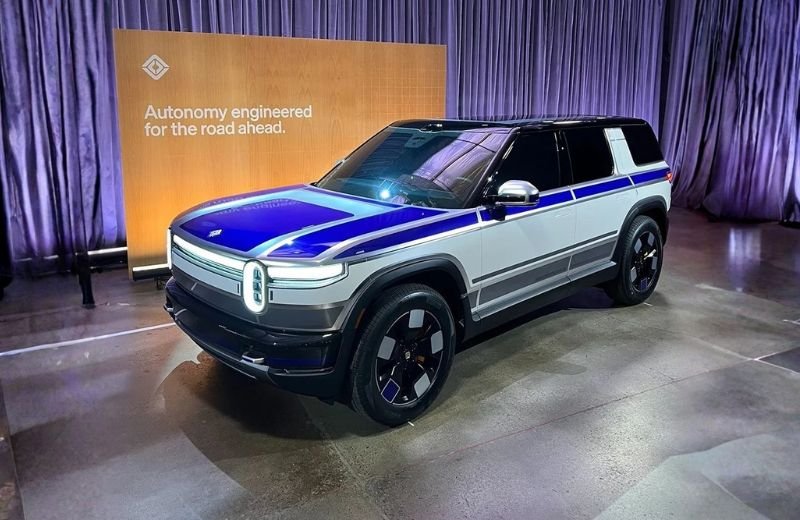
By Rivian is developing plans to build its own lidar sensors as it pushes forward with advanced autonomous driving technology for future vehicles. The company is actively evaluating how to design and manufacture these systems in the United States, which could make the R2 SUV one of the first mass market EVs with domestically produced lidar.
Lidar technology plays a key role in autonomous systems because it creates detailed 3D maps of a vehicle’s surroundings. As a result, it improves object detection, distance measurement, and overall driving awareness.
Rivian already includes advanced cameras and radar in its current development vehicles. However, the company uses these systems mainly to support early stages of hands free driving. At the same time, Rivian continues testing more advanced autonomy features for future upgrades.
In addition, the company focuses on building a stronger foundation for eyes off driving. Therefore, lidar becomes an important part of its long term strategy.
Manufacturing strategy and technology approach
Rivian is exploring multiple ways to bring lidar production in house. For instance, it may combine U.S. manufacturing with external technology partnerships. This approach would allow the company to access advanced lidar designs while still maintaining local production control.
Moreover, Rivian is in active discussions with solid state lidar developers. Although the company has not confirmed any official partner, it continues evaluating options that can support future scalability.
Interestingly, much of the recent progress in lidar innovation has taken place outside the United States, especially in Asia. Because of this, Rivian is considering ways to integrate global expertise into its domestic production plans.
R2 rollout and hardware timeline
Rivian plans to launch the R2 SUV with a phased technology rollout. Initially, early production models will rely on cameras and radar systems instead of lidar. This decision allows the company to begin production without delays.
However, later versions of the R2 are expected to include lidar hardware as part of an upgraded autonomy package. The company has already confirmed that the first lidar equipped units will enter production in the coming years.
Also read Pakistan sees sharp fall in fuel use after Rising petrol costs
Furthermore, Rivian will not offer hardware upgrades for earlier vehicles. As a result, only models built with lidar from the factory will support the full feature set.
Competitive position and future outlook
As competition in the electric vehicle market intensifies, automakers continue investing heavily in autonomy. Therefore, lidar development has become a strategic priority for companies aiming to achieve higher levels of self driving capability.
Rivian’s move into lidar production highlights its long term focus on software driven mobility. In addition, the company aims to strengthen control over key components that support autonomous performance.
Overall, Rivian’s strategy shows a clear shift toward deeper vertical integration. Consequently, the R2 platform could play a major role in shaping the company’s future in advanced electric and autonomous vehicles.