

 By
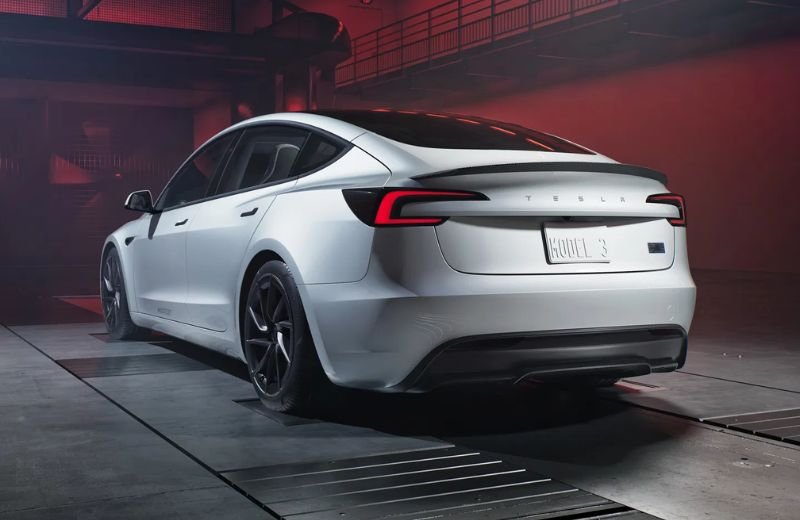
By Tesla’s popular electric sedan has once again shown why efficiency remains one of its biggest strengths. In a recent independent driving test, the rear-wheel-drive Tesla Model 3 managed to travel significantly farther than its official EPA range estimate, highlighting how real-world EV performance can sometimes exceed advertised figures.
Real-World Test Result Surprises Drivers
During a long-distance evaluation conducted by Edmunds, the Tesla Model 3 RWD covered nearly 400 miles on a single charge. The car achieved approximately 393 miles before the battery was depleted.
That result is around 30 miles more than the official EPA-rated range, making the sedan one of the strongest performers in its segment for energy efficiency.
Unlike laboratory-style testing, this drive included a mix of city and highway conditions intended to reflect everyday driving habits.
Why The Model 3 Performed So Well
One of the biggest reasons behind the impressive result is Tesla’s efficiency-focused engineering.
The Model 3 recorded an energy consumption figure of around 4.61 miles per kWh during the test, which is better than many competing electric sedans currently on sale.
Several factors continue to help the Model 3 remain highly efficient:
- Lightweight construction compared to many EV rivals
- Aerodynamic body design
- Optimized battery management software
- Efficient electric motor setup
- Strong regenerative braking system
Even after several years in the market, Tesla’s compact sedan still competes strongly against newer EVs from luxury and mainstream brands.
Charging Performance Also Remained Strong
The test did not only focus on range. Fast charging capability was also evaluated.
The vehicle reportedly reached charging speeds close to 250 kW, allowing it to recover driving range quickly during stops. According to the results, the car added roughly 100 miles of range in just over 12 minutes under fast-charging conditions.
That combination of efficiency and quick charging continues to be a major advantage for long-distance EV travel.
How It Compares To Other Electric Cars
The Model 3’s performance placed it ahead of several newer electric vehicles tested under similar conditions.
Its range result was higher than some luxury EV competitors despite Tesla’s sedan being older than many recent launches.
Also read BMW creates custom sound experience for next generation electric M car
The test once again demonstrated that battery size alone does not determine real-world range. Vehicle efficiency and software optimization play an equally important role.
Why These Tests Matter
Official EPA estimates are useful for buyers, but independent road tests often provide a better picture of how EVs behave in practical conditions.
Many drivers today want answers to simple questions:
- How far can the car actually go?
- How efficient is it in daily driving?
- How quickly can it recharge?
Results like this help potential EV buyers better understand real-world ownership experiences.
Despite growing competition in the electric vehicle market, the Tesla Model 3 remains one of the benchmark EVs for efficiency and usable range.
Its latest real-world performance shows that older platforms can still compete effectively when backed by strong software, efficient hardware, and continuous updates.
For buyers focused on maximizing driving distance while minimizing charging stops, the Model 3 continues to make a strong case in 2026.