

 By
By Chinese EV tech is advancing rapidly, with automakers now introducing headlights that can project full color movies. This latest development highlights how innovation in China’s electric vehicle sector continues to outpace traditional automotive markets, particularly in lighting and smart features.
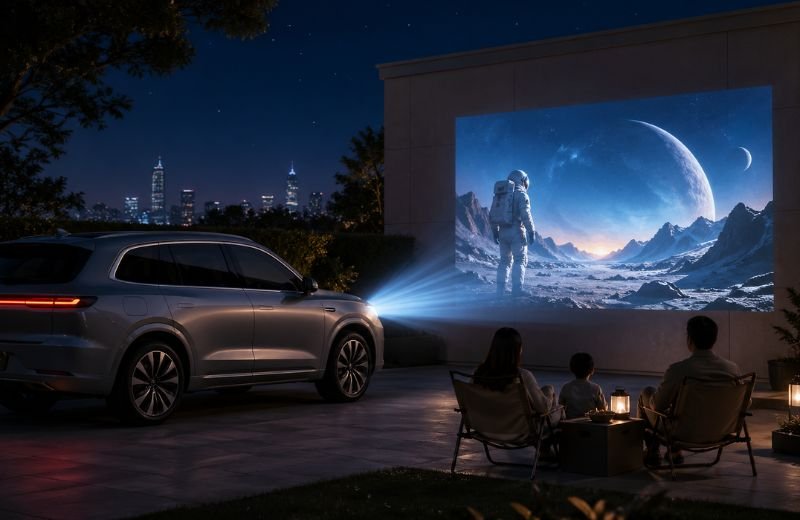
Huawei recently showcased its updated XPixel headlight system at the Beijing Auto Show, revealing a major upgrade that allows vehicles to project high quality visuals directly onto surfaces. The system transforms a parked car into a mobile entertainment hub, capable of displaying movies, shows, and even interactive visuals on nearby walls.
Advanced headlights expand beyond lighting
The XPixel system has been in development for several years, but the newest version adds full color projection, significantly expanding its capabilities. Earlier versions already supported driver assistance functions, such as guiding lane changes and improving pedestrian awareness. With the latest upgrade, the technology moves beyond safety into entertainment and interactive use.
Huawei confirmed that the feature will debut in the Aito M9 and is expected to roll out across additional models, including upcoming sedans and multi purpose vehicles. The integration of projection technology with vehicle systems allows the headlights to serve multiple roles, combining safety, communication, and media display in a single component.
The system can also project guidance signals onto the road, helping drivers navigate complex situations. In urban environments, it may assist pedestrians by signaling when it is safe to cross. For families, it introduces new use cases such as interactive games, turning idle time into an engaging experience.
Industry observers note that this reflects a broader trend in Chinese EV design, where manufacturers focus on combining digital features with hardware innovation. The goal is to create vehicles that function as smart platforms rather than simple transportation tools.
In contrast, the United States has only recently begun adopting adaptive driving beam technology. Regulatory constraints delayed the introduction of advanced headlight systems for years, limiting innovation in this area. While adaptive beams improve safety by adjusting light patterns to avoid glare, they do not yet approach the multifunctional capabilities seen in newer Chinese models.
Faster Deployment of Features
The gap highlights differences in regulatory environments and development priorities. Chinese automakers have moved quickly to integrate emerging technologies, often at competitive price points. This approach has enabled rapid experimentation and faster deployment of features that blend safety with user experience.
Also read GAC Launches MONTX Brand With Futuristic P10 and V10
Reactions within the global automotive industry have been mixed. Some experts view the projection feature as a glimpse into the future of vehicle design. Where cars act as digital companions. Others question how widely such features will be adopted outside China, citing regulatory and practical considerations.
Despite these uncertainties, the introduction of projection capable headlights signals a shift in how vehicles are designed and used. Lighting systems are no longer limited to visibility and safety. They are becoming communication tools and entertainment platforms.
As Chinese EV tech continues to evolve, features like movie projecting headlights may become more common. Their global adoption will depend on regulatory approval, consumer demand, and how effectively automakers integrate them into everyday driving experiences.