


 By
By The rise of autonomous vehicles is creating new challenges for fleet operations, especially when it comes to charging. A new EV charging robot aims to solve this issue by removing the need for human involvement in one of the most routine yet essential tasks.
Rocsys, a startup focused on charging automation, has introduced a robotic system designed to plug in electric vehicles without assistance. The solution targets robotaxi fleets, where efficiency and uptime are critical for large scale deployment.
Automated system improves charging efficiency
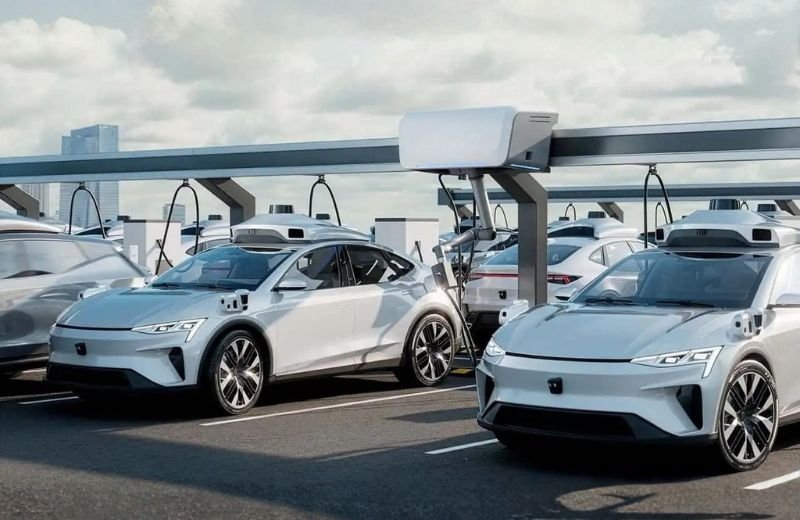
The system, known as Rocsys M1, uses a robotic arm mounted on an overhead rail. This setup allows the robot to move across multiple charging bays and connect vehicles to chargers as needed. Each installation can serve up to 10 parking spots, making it suitable for fleet depots.
When a vehicle arrives, the system identifies its position and activates the robotic arm. The arm retrieves a charging connector and inserts it into the vehicle’s charging port. The process eliminates the need for drivers or staff to manually handle cables.
Rocsys designed the technology to work across different vehicle models and charging systems. This flexibility allows operators to manage mixed fleets without requiring specialized hardware for each vehicle type. The robot can even open charging port doors if they do not operate automatically.
The company reports a 99.9 percent success rate for plug in attempts. This level of reliability is critical for autonomous fleets that depend on consistent and predictable operations. According to Rocsys, a large depot with dozens of charging bays could significantly improve productivity and reduce operational costs after adopting the system.
Growing demand for autonomous fleet support
Robotaxi services continue to expand, with companies increasing deployments in urban areas. However, most operations still rely on human support for tasks such as charging, maintenance, and cleaning. Automating these processes is seen as a key step toward fully autonomous fleet management.
The Rocsys system is currently in a pilot phase, with a broader rollout planned in the coming years. The company aims to support thousands of chargers across North America and Europe as demand grows.
Also read China EV tech turns headlights into movie projectors
Efforts to automate charging are not entirely new. Earlier concepts explored robotic connectors and wireless charging solutions, but many did not reach large scale use. Advances in robotics and software have improved feasibility, making current systems more practical for commercial deployment.
Despite these developments, challenges remain. Charging automation solves only part of the operational puzzle. Fleet operators must still address vehicle maintenance, interior cleaning, and unexpected passenger issues.
Even so, the introduction of a reliable EV charging robot marks an important step forward. It reduces dependency on human labor and helps fleets operate more efficiently. As autonomous vehicles become more common, solutions like this are likely to play a central role in supporting their daily operations.