


 By
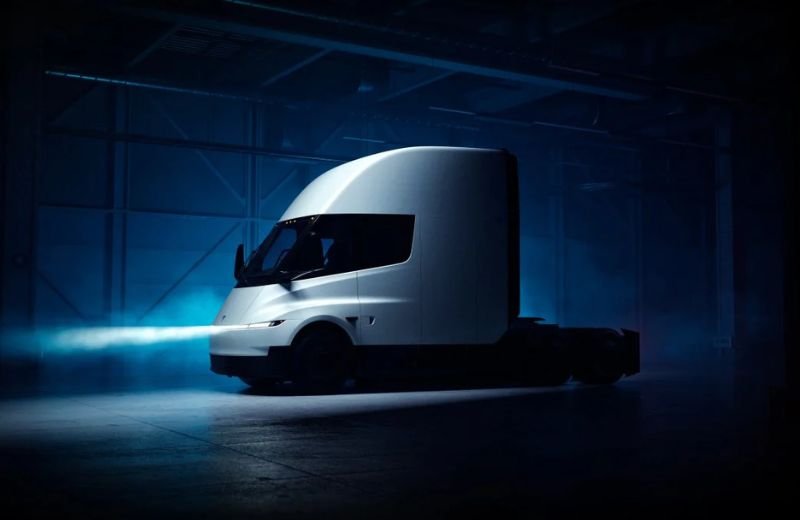
By Tesla has officially moved its long awaited Semi truck into mass production, marking a major step forward for its electric commercial vehicle program. The company confirmed that the Class 8 truck is now rolling off a high volume assembly line, nearly eight years after its initial debut.
First introduced in 2017, the Tesla Semi generated strong interest as a zero emission alternative for long haul trucking. However, repeated delays slowed its progress, limiting production to a small number of units over the years. With the shift to large scale manufacturing, Tesla now aims to meet growing demand from fleet operators.
Production ramp and vehicle capabilities
Tesla has produced only a few hundred Semi trucks so far, using a limited production setup. The company is now scaling operations at its Nevada facility, where it plans to significantly increase output. Executives have indicated that market conditions support expansion, pointing to both demand and improving production economics.
The Semi plays a central role in Tesla’s broader strategy, alongside projects such as autonomous vehicles and energy storage systems. The company has committed substantial investment to these areas, including increased spending on manufacturing capacity and battery production.
The electric truck is available in two configurations. The standard version offers a range of approximately 325 miles when fully loaded, while the long range variant can reach up to 500 miles. Both models use a three motor system designed to deliver high power and consistent performance under heavy loads.
Charging capability is another key feature. The Semi supports high speed charging that can restore a significant portion of its range in a short period. This helps reduce downtime, which is critical for commercial operators managing tight schedules.
Efficiency remains a major focus. Tesla estimates that the truck achieves strong energy performance compared to traditional diesel alternatives. The company has also designed the battery system for long term durability, aiming to support extended usage over the vehicle’s lifecycle.
Inside the cab, the Semi features a central driving position with digital displays placed on either side. This layout differs from conventional trucks and reflects Tesla’s approach to vehicle design and driver experience.
Also read Smart charging robot brings hands free EV fleet solution
Industry analysts view the start of mass production as an important milestone for electric trucking. The sector has faced challenges related to cost, infrastructure, and scalability. Tesla’s move into high volume manufacturing could accelerate adoption by demonstrating the viability of electric heavy duty transport.
Deliveries of the Semi are expected to begin later this year. As production increases, the truck will likely play a larger role in shaping the transition toward cleaner freight solutions. The success of this rollout may influence how quickly the broader trucking industry adopts electric alternatives.