

 By
By Solar-powered cars have long faced one major limitation: the panels on a vehicle usually cannot generate enough electricity to cover its daily driving needs. A student team at Clemson University has taken a different approach.
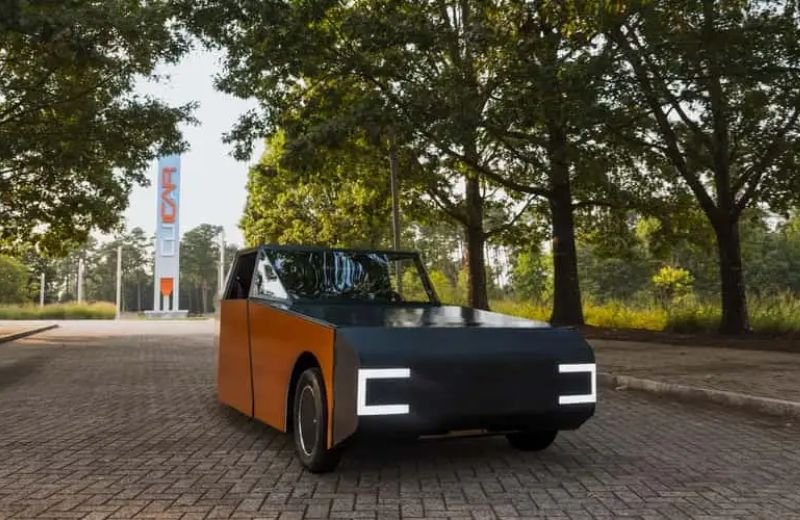
Working with BMW, the university’s Deep Orange program developed a fully functional prototype designed to generate more energy than it consumes during a typical urban commute. The result is called Deep Orange 17, a lightweight solar-electric vehicle built around efficiency rather than conventional automotive design.
A University Project With a Major Automotive Challenge
BMW presented the challenge to Clemson graduate students in 2024. The goal was ambitious: create an electric vehicle that could produce more energy than it uses during everyday city driving.
The project was developed through Clemson’s Deep Orange program, which allows graduate students to design and build working vehicle prototypes with industry partners.
Two years after BMW issued the challenge, the team has produced a functioning solar-powered prototype. BMW refers to the vehicle as Luminetta.
Solar Panels Cover Almost the Entire Vehicle
The most noticeable feature of Deep Orange 17 is its extensive use of solar technology.
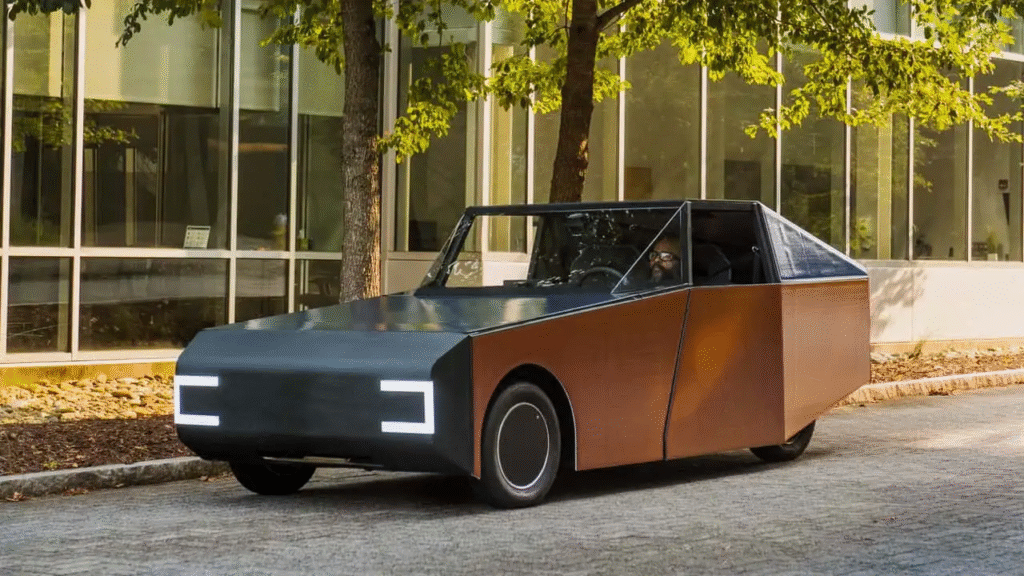
More than 1,700 photovoltaic cells are integrated into the vehicle’s exterior. Instead of placing solar panels only on the roof, the students used almost every available exterior surface to collect sunlight.
The panels were developed with the Fraunhofer Institute for Solar Energy Systems ISE. Their design allows the vehicle to capture solar energy from different directions as the sun moves across the sky.
The panels can also continue generating energy under shaded conditions, helping the vehicle make better use of available sunlight.
How Much Energy Can It Generate?
The project team based its calculations on a daily commute of around 12 miles.
Under those conditions, the solar system can generate enough electricity for approximately 31 miles of driving. That means the prototype can theoretically put more than twice the energy it consumes during the assumed daily commute back into its battery.
Solar generation provides most of that energy. The vehicle also recovers electricity through regenerative braking.
Deep Orange 17 at a Glance
| Feature | Details |
|---|---|
| Project | Deep Orange 17 |
| Development | Clemson University Deep Orange Program |
| Industry Partner | BMW |
| Solar Cells | More than 1,700 |
| Daily Commute Assumption | 12 miles |
| Solar Energy Equivalent | Around 31 miles |
| Vehicle Weight | 1,212 pounds |
| Energy Sources | Solar generation and regenerative braking |
| Solar Technology Partner | Fraunhofer ISE |
| Connectivity | Apple CarPlay |
| Instrumentation | Digital gauges |
Lightweight Construction Plays a Major Role
Solar panels alone cannot make a vehicle highly efficient. The team also focused heavily on reducing weight.
Deep Orange 17 weighs only 1,212 pounds. The prototype uses several materials to achieve that figure, including steel for the passenger cell, aluminum, carbon fiber, and 3D-printed metal joints.
Its unusual shape also serves a purpose. The design takes inspiration from a boxfish, creating a distinctive body that supports the project’s focus on efficiency and solar energy collection.
Efficiency Starts With the Drivetrain
The prototype does more than collect sunlight. Its engineers also worked to reduce the amount of energy required to move the vehicle.
Optimized torque distribution and drivetrain controls help limit energy consumption. Regenerative braking then recovers some of the energy normally lost during deceleration.
Together, these systems allow the vehicle to make better use of every unit of energy stored in its battery.
A Simple Interior Keeps the Focus on Efficiency
Deep Orange 17 is not designed as a luxury vehicle.
The cabin has a relatively simple layout with digital gauges and Apple CarPlay. The prototype does not offer the extensive comfort and entertainment equipment found in modern production EVs.
That simplicity helps keep the vehicle lightweight while allowing the students to concentrate on its primary objective: maximizing energy efficiency.
A production car covered entirely in solar cells is unlikely to become mainstream anytime soon. Vehicle surfaces have limited space, solar generation depends heavily on weather and sunlight, and adding photovoltaic technology can increase complexity and cost.
However, Deep Orange 17 demonstrates how several technologies can work together.
More efficient drivetrains, lightweight construction, regenerative braking, advanced solar cells, and smarter energy management can all reduce the amount of external energy an EV needs.
Also read Omoda 7 Plug-In Hybrid Launches in Pakistan With 90+ km EV Range
The project also shows that solar integration could become a useful supplementary energy source rather than the vehicle’s only method of charging.
What Comes Next for Solar EV Technology?
The Clemson project is not intended to become a mass-market vehicle. Instead, it provides a working platform for exploring how solar generation can improve electric vehicle efficiency.
BMW’s involvement also gives the project an important industry connection. The automaker challenged the students to move beyond theoretical concepts and demonstrate the idea with a functioning prototype.
Deep Orange 17 shows that an EV does not necessarily have to rely entirely on external charging. With enough attention to weight, energy consumption, solar collection, and regenerative systems, a vehicle can generate a significant portion of the energy it needs during everyday use.
The technology still faces practical limits, but projects like this could help manufacturers understand where solar power makes the most sense in future electric vehicles.