


 By
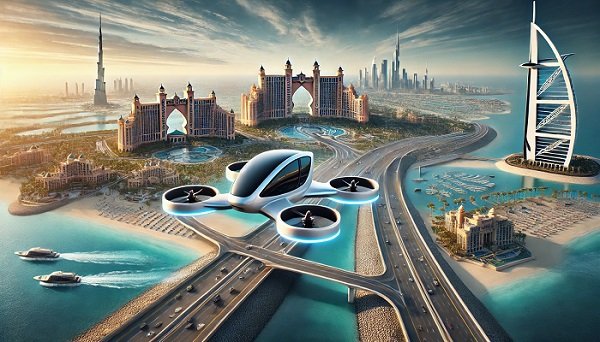
By Dubai is on the brink of transforming urban transportation with the launch of its flying taxi service by 2026. Anchored by the Dubai International Vertiport (DXV), located near Dubai International Airport (DXB), the groundbreaking initiative will connect key areas like Downtown Dubai, Marina, and Palm Jumeirah, slashing commute times to mere minutes.
A Futuristic Leap in Urban Transportation
Imagine hailing a flying taxi on a weekday morning and reaching Palm Jumeirah from DXB in just 10-12 minutes—a significant improvement over the 45-minute car ride during peak traffic. Dubai is making this vision a reality with a meticulously planned vertiport network that will redefine urban mobility. The Dubai International Vertiport, covering 3,100 square meters, is designed to handle 170,000 passengers and 42,000 landings annually, ensuring seamless and efficient operations.
State-of-the-Art Design and Safety Standards
The flying taxi service is backed by the General Civil Aviation Authority’s (GCAA) approval, ensuring strict adherence to safety regulations. From airspace considerations to advanced firefighting protocols for battery and fuel fires, every detail has been accounted for. Skyports Infrastructure, the developer behind the vertiports, has partnered with leading innovators like Joby Aviation, a U.S.-based pioneer in electric vertical takeoff and landing (eVTOL) aircraft.
Sustainability and Innovation at Its Core
Dubai’s flying taxis will be fully electric, offering zero emissions and significantly quieter operations compared to traditional helicopters. This eco-friendly approach aligns with the city’s vision for sustainable urban development and positions Dubai as a global leader in the air taxi industry.
As Dubai gears up for the 2026 launch, the flying taxi service promises to revolutionize how people commute, setting a new benchmark for urban transportation worldwide. The future of mobility is not just near—it’s taking flight in Dubai.