

 By
By Pakistan’s rapidly evolving SUV market is entering a new phase of competition—one that goes beyond traditional brand rivalries. Increasingly, comparisons are emerging within the same automotive groups, as manufacturers expand their portfolios with multiple brands targeting similar segments.
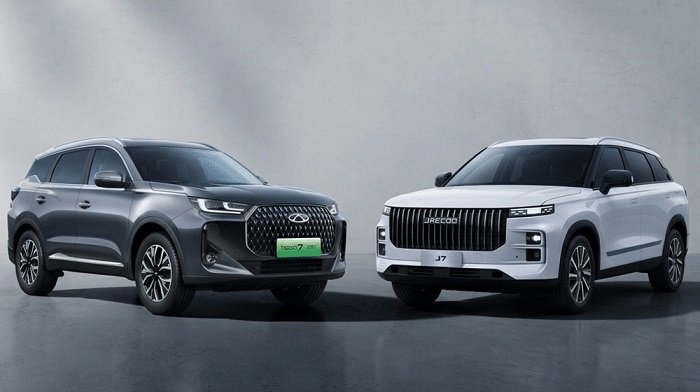
A prime example is the growing comparison between the Chery Tiggo 7 PHEV and the Jaecoo J7—two models backed by the Chinese automotive giant Chery Automobile. While both SUVs appear to cater to modern buyers seeking electrification, performance, and advanced features, a deeper look reveals important distinctions.
Shared DNA, Similar Performance
Both SUVs are built on closely related platforms and share core engineering elements. The Tiggo 7 PHEV is a C-segment plug-in hybrid based on Chery’s advanced Super Hybrid architecture. It pairs a 1.5TGDI engine with an 18.3 kWh battery and a dedicated hybrid transmission.
This setup delivers impressive numbers:
- Up to 90 km pure electric range
- Around 1,200 km combined range
These figures place it among the most capable electrified SUVs currently available in Pakistan.
The Jaecoo J7, meanwhile, carries similar hybrid underpinnings but is positioned differently. As part of Chery’s newer sub-brand strategy, Jaecoo emphasizes a more lifestyle-oriented and design-focused appeal. Its exterior is more rugged and upright, targeting buyers who prefer an off-road-inspired aesthetic.
Price Gap That Matters
Despite their similarities, the Pakistani market reveals a significant difference—price. The Tiggo 7 PHEV is estimated to be nearly Rs. 1 million cheaper than the Jaecoo J7.
In a price-sensitive market like Pakistan, this gap is far from negligible. For many buyers, especially those transitioning from conventional petrol SUVs, affordability plays a decisive role. The Tiggo 7 PHEV positions itself as a strong value proposition by offering comparable hybrid technology and performance at a lower entry point.
Understanding Badge Engineering
Globally, sharing platforms across multiple brands—often referred to as “badge engineering”—is a common industry practice. However, Pakistani consumers are becoming increasingly aware of such strategies.
Rather than focusing solely on design or branding, buyers are now evaluating:
- Underlying engineering
- Powertrain efficiency
- Real-world ownership costs
This shift in mindset is reshaping purchasing decisions in the local automotive market.
Practicality in a High Fuel Cost Environment
With fuel prices in Pakistan remaining volatile, plug-in hybrid vehicles offer a practical middle ground. The Tiggo 7 PHEV, in particular, aligns well with current market needs by allowing:
- Daily commutes on electric power
- Long-distance travel using its petrol engine
This dual capability enhances both convenience and cost efficiency.
Final Verdict: Value vs Positioning
As Pakistan’s hybrid SUV segment expands, intra-brand comparisons like this are expected to become more common. While the Jaecoo J7 stands out with its bold design and lifestyle positioning, the Tiggo 7 PHEV makes a compelling case through its value-driven approach.
For many consumers, the key question is no longer about styling differences—but about which SUV delivers more for the price. And in that equation, the Tiggo 7 PHEV clearly emerges as a strong contender.