

 By
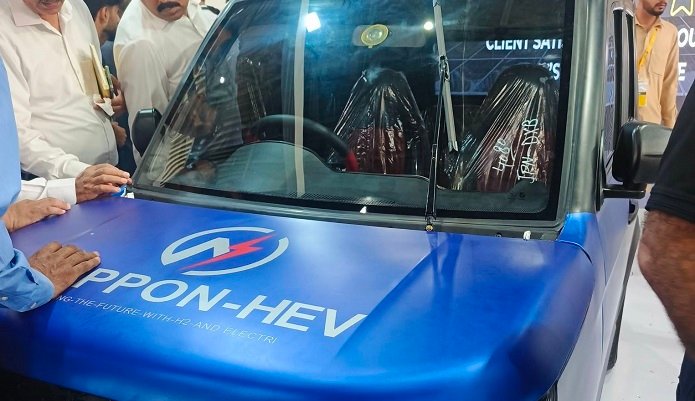
By The Pakistani automotive industry witnessed a surprising development at a recent exhibition where NIPPON Energy (NIPPON HEV) unveiled what it described as Pakistan’s first hydrogen-powered car and motorcycle ecosystem. The company’s showcase quickly became one of the most talked-about attractions at the event, thanks to its ambitious claims of ultra-long driving range, home-based hydrogen production, and affordable hydrogen mobility.
According to NIPPON HEV, its hydrogen-electric vehicle combines battery-electric technology with a hydrogen-powered energy system, creating a unique alternative to conventional petrol, hybrid, and fully electric vehicles.
NIPPON HEV Hydrogen Car Specifications
The company revealed the following key specifications for its hydrogen-powered vehicle:
| Feature | Specification |
|---|---|
| Motor | 30 kW Electric Motor |
| Top Speed | 80–90 km/h |
| Standard Battery Range | Up to 300 km |
| Hydrogen Cylinder Capacity | 3 kg |
| Claimed Hydrogen Range | 1,500 km |
| Total Combined Range | Up to 1,800 km |
NIPPON HEV claims the vehicle can travel approximately 500 km on just 1 kg of hydrogen, resulting in a total hydrogen-assisted driving range of 1,500 km from a 3 kg cylinder. Combined with the battery-powered range, the company suggests the vehicle could achieve up to 1,800 km before requiring a recharge or hydrogen refill.
Home Hydrogen Production from Tap Water
Perhaps the most eye-catching aspect of the presentation was NIPPON HEV’s claim that vehicle owners can generate hydrogen at home using ordinary tap water.
The company says its solar-powered electrolysis system separates hydrogen from water and produces up to three liters of hydrogen per minute. According to the presentation, users can refill the vehicle’s hydrogen cylinder at home using a high-pressure system in as little as 20 seconds.
If successfully commercialized and proven safe, such technology could significantly reduce dependence on fuel stations and make hydrogen-powered mobility more accessible in regions with abundant solar energy.
Massive Booking Numbers Announced
NIPPON HEV also announced an aggressive market entry strategy, pricing the hydrogen-electric car at PKR 2,499,999 (approximately 25 lakh rupees).
The company further claimed that it secured more than:
- 1,200 vehicle bookings on the first day
- 8,000 motorcycle bookings on the first day
These figures, if verified, would represent one of the most successful alternative-energy vehicle launches in Pakistan’s automotive history.
Can the Technology Deliver?
While the concept has generated excitement, industry experts and automotive enthusiasts have raised questions regarding the technical feasibility of several claims, particularly the reported 500 km range per kilogram of hydrogen and the ability to refill a high-pressure hydrogen cylinder at home within seconds.
Globally, hydrogen fuel-cell vehicles are considered one of the most promising zero-emission transportation technologies. However, hydrogen production, storage, compression, transportation, and safety infrastructure remain major challenges even in developed markets such as Japan, South Korea, Germany, and the United States.
For Pakistan, where electric vehicle adoption is still in its early stages, the introduction of a hydrogen-powered ecosystem could represent a major technological leap—provided the claims can be independently verified through real-world testing and regulatory approval.
The Future of Hydrogen Mobility in Pakistan
NIPPON HEV’s unveiling has undoubtedly sparked interest in hydrogen-powered transportation and renewable energy integration. Whether the company’s ambitious range, refueling, and home hydrogen production claims can withstand technical scrutiny remains to be seen.
Nevertheless, the launch highlights growing interest in alternative fuel technologies in Pakistan and could encourage further investment in hydrogen, electric vehicles, and renewable energy solutions. If successful, hydrogen-powered mobility may eventually become an important part of Pakistan’s transition toward cleaner and more sustainable transportation.
Disclaimer:
The specifications, range figures, booking numbers, pricing, and hydrogen production claims mentioned in this article are based on information gathered at the exhibition where the car was showcased. Readers are advised to await official testing results, regulatory approvals, and third-party validation before making any purchasing decisions.