

 By
By Tesla has unveiled its long-awaited next-generation Roadster, an electric sports car featuring rocket-inspired propulsion technology that allows it to perform brief aerial manoeuvres. Led by Elon Musk, the demonstration took place on October 15, 2026, at a SpaceX testing facility in McGregor, Texas, attracting global attention for its combination of electric vehicle engineering and aerospace technology.
The new Tesla Roadster was shown performing a series of unusual stunts, including driving upside down on a curved ramp, flipping in mid-air and jumping over a lineup of Tesla vehicles. The demonstration showcased the company’s ambitious vision for a high-performance electric sports car that goes beyond conventional road driving. However, the displayed capabilities remain experimental, and the vehicle is not a conventional aircraft.
Tesla Roadster Uses SpaceX-Inspired Propulsion Technology
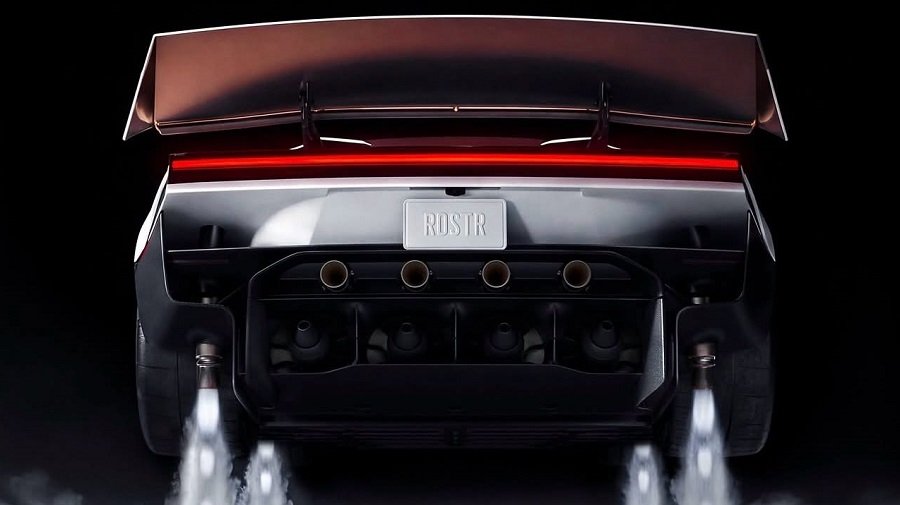
One of the most remarkable features of the new Tesla Roadster is its cold-gas thruster system, developed with technology associated with SpaceX. According to the company’s presentation, the advanced system uses 10 thruster nozzles connected to high-pressure compressed-air tanks to generate thrust for short airborne movements.
The system was demonstrated during controlled stunts, allowing the vehicle to lift briefly, rotate in the air and return to the ground. Unlike conventional electric vehicles that rely entirely on wheels for movement, this technology introduces a new dimension of propulsion to a road-going sports car.
Tesla has also demonstrated a fan-powered suction system designed to generate substantial downforce. This technology is intended to help the car maintain traction and stability during extreme manoeuvres, including driving upside down on a specially designed curved surface.
Despite the impressive demonstration, the vehicle’s short jumps should not be confused with sustained flight. Practical applications would require extensive testing, particularly in areas such as vehicle stability, propulsion control, energy management and passenger safety.
Futuristic Exterior and Lightweight Interior Design
The redesigned Tesla Roadster features a minimalist exterior with concealed headlights, a full-width rear taillight and flush-mounted body surfaces. Its styling combines a futuristic appearance with aerodynamic design elements intended to support high-speed performance.
The vehicle also incorporates active aerodynamics and lightweight materials. Magnesium, titanium and carbon fibre are among the materials associated with the design approach, helping reduce weight while maintaining structural strength.
Inside, the Roadster is presented with an ultrawhite interior, grey microsuede detailing and supportive seat bolsters. The emphasis on lightweight construction and driver-focused controls reflects Tesla’s performance-oriented approach.
The company has also highlighted specialised glass, distinctive paint finishes and carefully integrated design details that give the vehicle an aerospace-inspired appearance.
Three Tesla Roadster Versions Planned
Tesla has presented three versions of the next-generation Roadster: Performance, Thrust and Rocket.
- Performance: Designed as the road-focused version, featuring active aerodynamics and the company’s advanced performance technology.
- Thrust: Adds cold-gas propulsion technology intended to deliver more extreme acceleration and performance capabilities.
- Rocket: The most experimental version, featuring a more advanced thruster configuration designed for aerial manoeuvres.
Tesla has indicated that the Roadster could accelerate from zero to 60 miles per hour in less than one second under its demonstrated configuration. The company has also cited a potential top speed exceeding 230 mph and a range of more than 300 miles.
These figures are manufacturer-stated performance targets and should be treated as claims awaiting independent verification on a production vehicle.
According to reporting following the unveiling, Tesla’s reservation page listed a $50,000 reservation payment for the Performance version and $250,000 for the Thrust version, while the Rocket version was described as invitation-only. These payments should not be confused with confirmed final vehicle prices.
Tesla Roadster Production Target Set for 2028
Elon Musk said production of the next-generation Tesla Roadster is planned for 2028. The announcement renews interest in a vehicle that was originally unveiled in 2017 and has faced repeated delays.
The latest demonstration has given prospective buyers a clearer look at Tesla’s ambitious engineering direction, although the final production vehicle may differ from the version showcased in Texas.
Safety and regulatory approval will also be important considerations, especially for any features involving high-pressure propulsion and airborne movement. A vehicle capable of brief jumps in a controlled demonstration would face significant challenges before such technology could be used safely in everyday traffic.
Tesla has not established that its aerial manoeuvres will be legal or available for use on public roads in every jurisdiction.
Could Tesla’s New Roadster Change Electric Sports Cars?
The new Roadster highlights how electric vehicle manufacturers are exploring technologies beyond traditional acceleration, range and charging performance. By combining electric propulsion with aerospace-inspired systems, Tesla is attempting to create a distinctive high-performance vehicle.
Nevertheless, the technology’s real-world usefulness remains an open question. Conventional road safety, passenger protection, maintenance requirements and regulatory compliance will be crucial to its commercial success.
If Tesla delivers the promised performance, the Roadster could become one of the most unusual electric sports cars on the market. For now, its aerial stunts represent an ambitious engineering demonstration rather than proof that practical flying cars are ready for everyday transportation.
With production targeted for 2028, the automotive industry and EV enthusiasts will be watching closely to see whether Tesla can turn its futuristic concept into a commercially viable vehicle.
Disclaimer: Performance figures, technical capabilities, pricing-related reservation amounts and production timelines are based on company statements and media reports available at the time of writing. Final specifications and availability may change before production.