


 By
By Rivian is preparing to launch its first global electric vehicle, the R2, this spring. The R2 will bring the California automaker to new markets in Europe and Asia, competing directly with established EVs in those regions. The vehicle is more affordable than Rivian’s flagship R1 models and incorporates clever engineering to keep production costs down.
The key to Rivian’s strategy lies in its connectivity system. Unlike most EVs, the R2 will use identical 5G hardware for all markets. This hardware supports over-the-air software updates and smartphone connectivity. By standardizing hardware worldwide, Rivian reduces the number of parts needed and simplifies logistics.
Global Hardware, Smart Software
Rivian’s R2 is one of the first vehicles to implement the GSMA SGP.32 standard for eSIM 5G connectivity. This technology allows Rivian to remotely manage carrier profiles without changing the physical hardware in the car.
In the U.S., the R2 will use AT&T connectivity. For other regions, the same hardware will be deployed, with carrier profiles switched remotely as needed. Owners will not need to visit service centers to change network operators. Rivian can also enable, disable, or delete eSIM profiles over the air, keeping the system flexible and secure throughout the vehicle’s lifecycle.
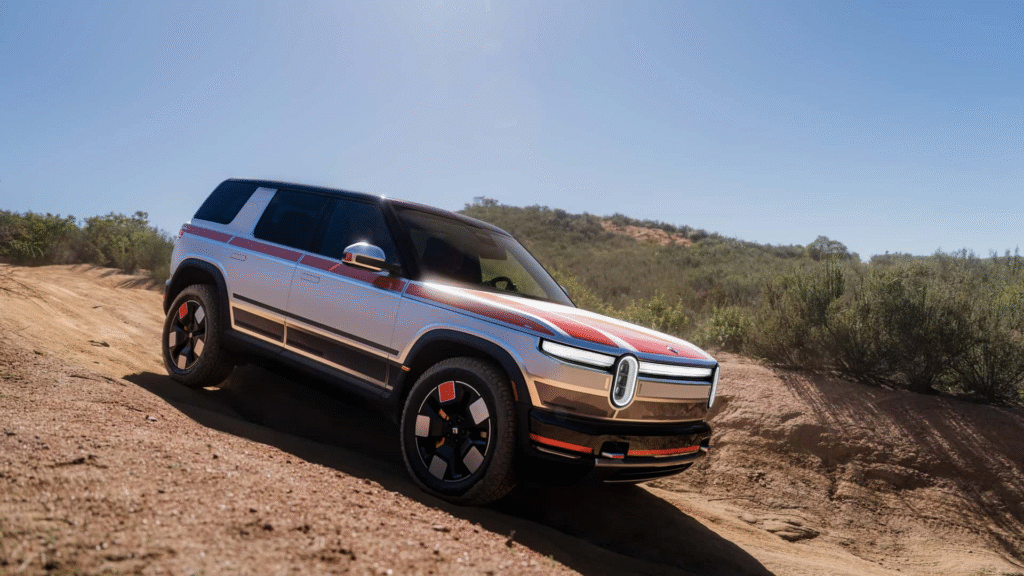
Automotive-grade eSIM hardware for the R2 is provided by Germany’s Giesecke+Devrient. Their infrastructure ensures Rivian can manage connectivity remotely while maintaining security standards.
Performance and Specs
The R2 Performance All-Wheel Drive model will start at $59,485 in the U.S. It features an 87.9-kilowatt-hour battery, an EPA-estimated 330-mile range, 656 horsepower, and 609 pound-feet of torque. More affordable versions of the R2 are expected to arrive later in 2026 and 2027.
Rivian is also improving other components, including wiring looms, electric motors, battery packs, and manufacturing processes. By streamlining these areas alongside the global hardware strategy, the R2 becomes more cost-effective while still offering high performance and advanced technology.
Global Ambitions
The Rivian R2 marks a critical step in the company’s global expansion. The first Europe-bound units are expected to ship next year. By combining flexible eSIM connectivity with standardized hardware, Rivian can offer a single global model while adjusting software to meet regional requirements.
Also read Renault Plans Extended Range EV Platform for Future Models
This approach allows Rivian to compete internationally without the need for separate vehicle variants in different markets. If successful, the R2 could set a new standard for global EV production, balancing cost efficiency with advanced connectivity features.
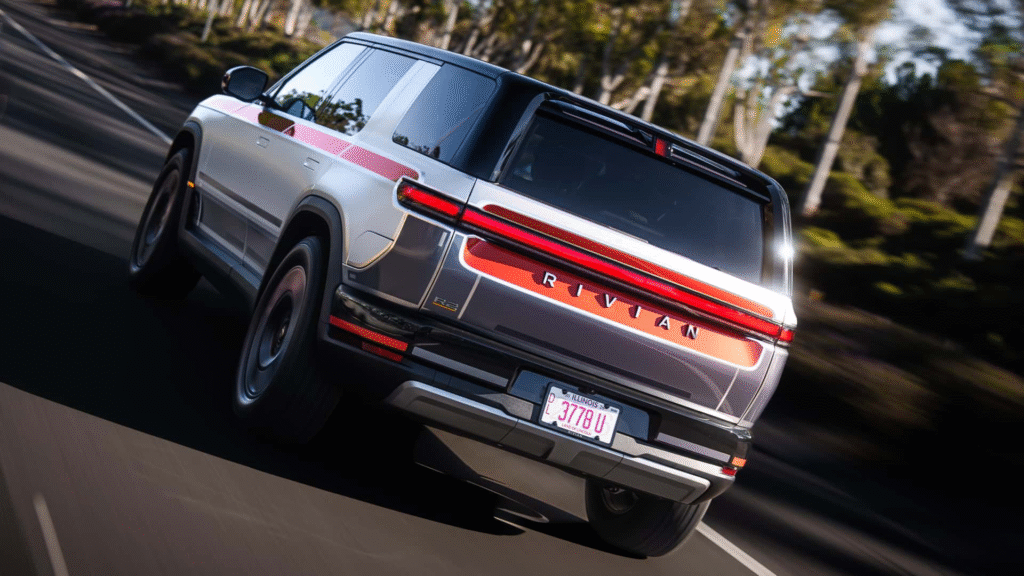
Rivian’s R2 shows that global EV success requires not just performance and range but also smart engineering to reduce complexity and maximize flexibility for international customers.