

 By
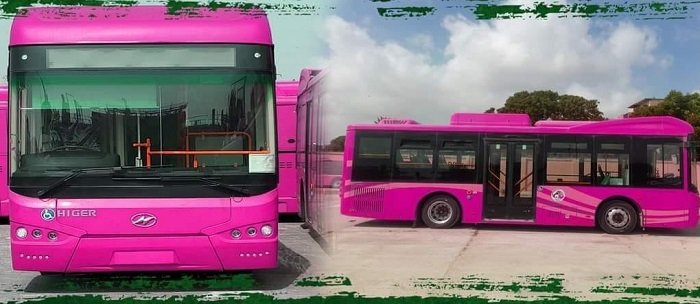
By The Federal Ministry of Education has achieved a significant milestone in promoting female education through the restoration of 99% of previously idle pink buses, now fully operational. Announced by Secretary Mohiuddin Ahmed Wani during a National Assembly’s Standing Committee meeting, the initiative currently serves over 8,000 girls from rural areas, ensuring safe and convenient travel to urban schools.
Bridging the Urban-Rural Educational Gap
This milestone builds upon the government’s “No Fare No Barrier” initiative, launched under the Prime Minister’s directive to facilitate free transportation for female students and teachers. By connecting rural areas to urban educational institutions, the pink bus service aims to reduce obstacles in accessing quality education.
In addition to the operational transportation service, Wani emphasized plans to secure additional budgetary allocations to upgrade school facilities in rural regions. These upgrades will include modern amenities, narrowing the educational gap between urban and rural areas.
Operational Details of the Pink Bus Service
The pink bus service currently operates a fleet of 20 buses along specific routes, ensuring accessibility and efficiency for female students and teachers. The service prioritizes school hours, with morning trips from 6:00 AM to 9:00 AM and afternoon trips from 1:30 PM to 4:00 PM, minimizing wait times for passengers.
Key Routes
The routes are designed to maximize coverage:
- Route 1-A: Nilore to F-11/1 FGCH&E&MS
- Route 1-B: Nilore (Ziarat Stop) to Secretariat
- Route 2-A: Bhara Kahu to F-11/1 FGCH&E&MS (via F-6)
- Route 2-B: Bhara Kahu to F-11/1 FGCH&E&MS (via G-6)
- Route 3-A: Humak to Secretariat
- Route 3-B: Humak to F-11/1 FGCH&E&MS
- Route 4-A: I-14 (IJP Road) to Secretariat
- Route 4-B: I-14 (IJP Road) to F-11/1 FGCH&E&MS
- Route 5-A: B-17 to Secretariat (via Margalla Avenue)
- Route 5-B: B-17 to Secretariat (via GT Road, G-14)
A Step Toward Educational Equity
The pink bus initiative represents a significant step toward educational equity, providing girls from rural areas with a safe and reliable mode of transportation. By addressing transportation challenges, the government is paving the way for more girls to access urban schools and educational opportunities without financial or logistical barriers.
This initiative not only empowers female students but also underscores the government’s commitment to improving the education sector, particularly for underserved communities.