


 By
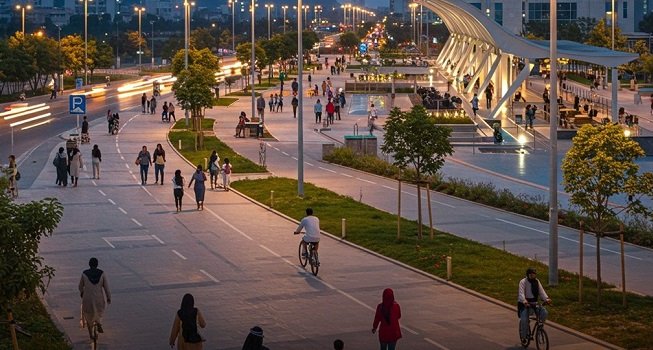
By The recent expansion of Park Road in Islamabad has transformed it into one of the busiest routes in the city—but also one of the most dangerous for pedestrians. While the Capital Development Authority (CDA) completed the Rs2 billion road widening project in January 2025, the absence of pedestrian bridges near universities such as Comsats University, Iqra University, and Abasyn University has created severe safety risks.
The newly expanded six-lane road was designed to improve traffic flow, but it has also encouraged high-speed driving. This poses a serious danger for thousands of students and residents who must cross the road daily.
Thousands of Students at Risk on Park Road
The area near Hostel City, a residential zone accommodating over 20,000 students, has become particularly hazardous. Many students live across the road from their campuses and are forced to cross heavy traffic without proper crossing points or signals.
“Every day, students risk their lives crossing Park Road to reach their classes,” said Abbas Khan, a student at Comsats University. “Without a pedestrian bridge or even traffic lights, it’s extremely dangerous.”
Reports indicate several road accidents have already occurred this year, including one involving a female student who was seriously injured while crossing the road.
CDA Promises Pedestrian Bridges on Park Road
Following public criticism, a CDA official confirmed that the authority plans to install three pedestrian bridges along Park Road, including one near Comsats University.
“We are aware of the issue and will install the bridges soon,” the official said.
Additionally, the CDA has revealed plans to construct six pedestrian bridges across Islamabad — three on Park Road, one on Srinagar Highway, and another on the Islamabad Expressway near Kak Pul — as part of a broader pedestrian safety initiative.
Students Demand Urgent Action from CDA
Despite these assurances, students and residents remain frustrated by the delay. “The CDA completed the road months ago but ignored basic pedestrian needs,” said Muneer Ali, a local resident. “We shouldn’t have to wait for a tragedy before a bridge is built.”
Comsats University faculty members have also urged immediate temporary safety measures such as traffic signals, zebra crossings, and speed cameras to protect students until the bridges are constructed.
Prioritizing Safety Over Speed
The expansion of Park Road Islamabad has improved traffic capacity but exposed a major oversight in pedestrian safety planning. With thousands of students and commuters at risk, the installation of pedestrian bridges is no longer optional—it’s a necessity. The CDA’s swift action could prevent further accidents and restore confidence among Islamabad’s growing academic community.