

 By
By Pakistan has taken a major leap in autonomous mobility as engineers at NED University of Engineering and Technology successfully conducted the first test run of the country’s AI-powered driverless car. The self-driving electric vehicle smoothly navigated the university’s internal roads, attracting widespread attention from students, researchers, and visitors who witnessed the groundbreaking trial.
The innovative project has been developed by the National Centre for Artificial Intelligence (NCAI) at NED University, where a dedicated team has spent over a year transforming a China-imported electric car into a fully autonomous system. The engineers integrated a wide range of advanced technologies, including artificial intelligence, robotics, computer vision, mapping tools, high-resolution sensors, and radar-based steering control, to bring the vehicle to life.
A Year of Intensive Development
Dr. Muhammad Khurram, Director of NCAI and head of the project, confirmed that the car has reached a mature testing phase after continuous development efforts. He highlighted that the team successfully built a steering-control mechanism powered by radar and computer vision, enabling the vehicle to move independently and respond to surrounding traffic.
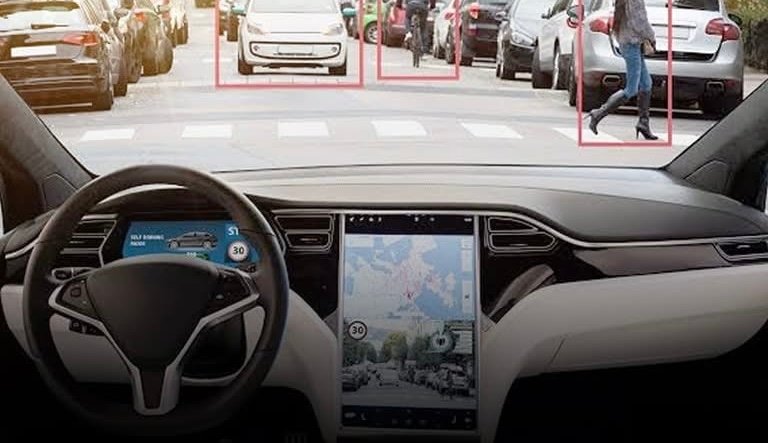
The engineering team is now enhancing the system’s capabilities further. The next phase focuses on:
- Object detection and obstacle avoidance
- Lane recognition on complex and uneven roads
- Speed-limit identification
- Traffic signal interpretation
These improvements aim to bring the vehicle closer to global autonomous driving standards while addressing the unique challenges of Pakistani road environments.
Designed for Local Road Challenges
One of the standout advantages of the NED autonomous vehicle is its ability to operate safely on local roads, which often include potholes, broken surfaces, unpredictable traffic, and poor lane markings. According to team member Inzamam Khan, the car’s integrated high-resolution sensors help it navigate these conditions with considerable accuracy.
During the trial, the vehicle reached speeds of 15 to 20 km/h, successfully making turns and evaluating oncoming vehicles without human input—marking a promising start for Pakistan’s entry into driverless mobility.
A National Milestone in Engineering & AI
The initiative began during the tenure of former Vice Chancellor Dr. Saroosh Hashmat Lodhi and has continued to progress under the leadership of current Vice Chancellor Dr. Tufail Ahmed. Their administrative support, coupled with the technical expertise of NED engineers, has made the dream of an indigenous autonomous vehicle a reality.
The successful trial of Pakistan’s first AI-powered driverless car represents a historic milestone for the nation’s engineering, robotics, and artificial intelligence sectors. It reflects the growing capabilities of Pakistani researchers and positions the country on the global map of emerging autonomous technologies.
As development continues, NED University aims to further refine the system, paving the way for future applications in smart transportation, AI-powered mobility, and industrial automation across Pakistan.