


 By
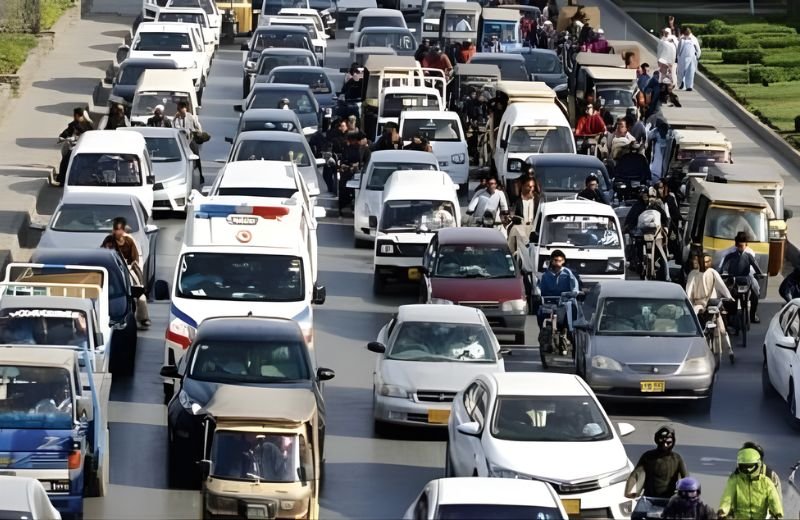
By Despite the Sindh government’s aggressive push to enforce e-challans, Karachi’s traffic problems show little improvement, largely due to a fragmented and outdated traffic engineering system. According to sources and officials, the core issue lies not in enforcement but in the lack of a unified authority responsible for managing signal systems, road markings, and overall traffic flow.
Currently, several entities share overlapping duties, resulting in poor coordination, inefficiencies, and chronic neglect of essential infrastructure.
Fragmented Responsibilities Fuel Traffic Chaos
Karachi’s traffic engineering responsibilities are divided among:
- Traffic Engineering Bureau (TEB) of the Karachi Development Authority (KDA)
- Sindh Mass Transit Authority (SMTA)
- Cantonment boards
This fragmented structure leaves no single body fully accountable, slowing down decision-making and delaying repairs and upgrades.
TEB, which is primarily responsible for installing and maintaining traffic signals and signage, is facing severe financial constraints. KDA officials confirmed that:
- Out of 130 traffic signals in the city,
- 90 fall under TEB
- 40 are managed by cantonment boards
Shockingly, TEB is actively maintaining only 50 of its 90 signals, leaving dozens nonfunctional and in urgent need of repair. KDA Director General Asif Jan Siddiqui openly admitted that budget limitations are preventing the authority from fulfilling even its basic responsibilities.
Sindh Government Considers Karachi Traffic Management Company
To address these systemic issues, the Sindh government is now considering the creation of a Karachi Traffic Management Company (KTMC). The proposed company would centralize all traffic engineering functions, including:
- Installation and maintenance of traffic signals
- Road and lane markings
- Repair and redesign of U-turns
- Installation of zebra crossings
- Placement of traffic signboards
Sources say the company would be chaired by the Karachi mayor, with the commissioner and private-sector experts serving as board members. The new entity would effectively absorb the TEB, streamlining all traffic engineering operations under one authority.
DIG Traffic Pir Muhammad Shah reportedly briefed industrial representatives, explaining that the KTMC would be funded through a share of challan revenues to ensure sustainable financing for road improvements.
However, Karachi’s commissioner clarified that the proposal remains in its “conceptual stage.” Another option on the table is merging the TEB into the Karachi Metropolitan Corporation (KMC).
SMTA Continues Installing Signals Independently
Despite TEB’s official mandate, the Sindh Mass Transit Authority has already begun acting independently. SMTA Managing Director Kanwal Nizam Bhutto confirmed that the authority has:
- Installed 11 new traffic signals in areas such as Model Colony, Gulberg, Tipu Sultan Road, Gurumandir, Kamran Chowrangi, Munawar Chowrangi, and Steel Township
- Upgraded 24 of 27 existing signals under the Annual Development Plan
- Installed 243 new traffic signboards along major arteries including Shahrah-i-Quaideen, Shaheed-i-Millat Road, Rashid Minhas Road, Shahrah-i-Pakistan, and Saddar
These improvements highlight the urgency of establishing a unified system to prevent duplication of work and ensure consistent traffic management.
A Unified Body Could Finally Bring Relief
Karachi’s traffic challenges stem more from governance fragmentation than from driver behavior alone. Establishing a centralized Karachi Traffic Management Company could finally bring accountability, coordinated planning, and long-needed upgrades to the city’s traffic infrastructure.