

 By
By As the U.S. car market continues to shift, automakers are adjusting their electric vehicle plans. Fully electric sales have grown slower than expected, especially for trucks and large SUVs. Charging access remains uneven in many regions, and federal incentives are no longer guaranteed. As a result, extended-range electric vehicles, known as EREVs, are gaining serious attention.
An EREV drives on electric motors at all times. A gasoline engine is included, but it never powers the wheels. Instead, it works as a generator once the battery runs low. Drivers get the smooth feel of an EV while keeping the ability to refuel at a gas station. Most EREVs also allow fast charging, which adds flexibility for daily use and long trips.
This approach reduces range anxiety and makes electrification easier for buyers who are not ready to rely only on charging stations. It also works well for towing and highway driving, where large EVs often struggle.
Ram 1500 REV (2027)

Ram plans to launch one of the most important EREVs in the U.S. with the Ram 1500 REV. Production is scheduled for the second half of 2026, with sales beginning as a 2027 model. It originally planned a fully electric truck, but the company shifted strategy as demand softened.
The Ram 1500 REV uses a 92-kilowatt-hour battery that powers electric motors at both axles. Combined output reaches 647 horsepower and 610 pound-feet of torque. The truck can drive about 145 miles on battery power alone. When the battery runs low, a 3.6-liter V6 engine turns on to generate electricity. With a full battery and a full tank, total range reaches about 690 miles.
The truck also supports DC fast charging. In ideal conditions, it can add roughly 50 miles of electric range in around ten minutes.
Scout Terra Pickup and Traveler SUV (2027)

Scout Motors will re-enter the market with the Terra pickup and Traveler SUV. Both vehicles will be built in South Carolina, with production expected to start near the end of 2026. The new Scout models draw inspiration from the original International Harvester Scout, but use modern electric platforms.
The extended-range versions use a lithium-iron-phosphate battery with about 63 kWh of capacity. This setup delivers close to 150 miles of electric driving. A naturally aspirated four-cylinder engine works as a generator and extends total range to around 500 miles. Scout will also sell fully electric versions with larger batteries and an estimated 350 miles of range.
Scout says most reservation holders have chosen the EREV configuration. Pricing is expected to start below $60,000, though final details have not been confirmed.
Jeep Grand Wagoneer EREV (2026)

Jeep plans to introduce its own EREV with the next Grand Wagoneer. The model is expected to arrive in 2026 and uses the same basic system as the Ram 1500 REV.
The Grand Wagoneer EREV pairs a 92 kWh battery with two electric motors. Total output reaches 647 horsepower and 620 pound-feet of torque. Jeep says the SUV can reach 60 mph in about five seconds, making it the quickest Grand Wagoneer to date. Jeep has not shared electric-only range figures, but total range will exceed 500 miles.
Hyundai and Genesis EREV SUVs (2027)

Hyundai will bring extended-range technology to the U.S. with a new SUV built in America. Production is set to begin by the end of 2026, with sales starting in early 2027. A Genesis version will follow using the same platform.
Both models will rely entirely on electric motors for propulsion. A gasoline engine will serve only as a generator to recharge the battery. Hyundai is targeting a total driving range of more than 560 miles. The company has not confirmed which models will use the system, but it has said these vehicles will cost less than comparable electric SUVs.
| Model | Expected Launch | Electric Range | Total Range |
|---|---|---|---|
| Ram 1500 REV | 2027 | ~145 miles | ~690 miles |
| Scout Terra / Traveler | 2027 | ~150 miles | ~500 miles |
| Jeep Grand Wagoneer EREV | 2026 | Not disclosed | 500+ miles |
| Hyundai EREV SUV | 2027 | Not disclosed | 560+ miles |
| Genesis EREV SUV | 2027 | Not disclosed | 560+ miles |
Ford F-150 Lightning EREV (Timing Unconfirmed)

Ford is working on an extended-range version of the F-150 Lightning. The current electric model will not receive a direct EV successor. Instead, Ford plans to replace it with an EREV designed to deliver more than 700 miles of total range. The new truck should also reduce the sharp range loss that occurs when towing.
Ford has not shared a launch date, but the project replaces the canceled next-generation electric truck program.
Kia EREV and Other Near-EREVs

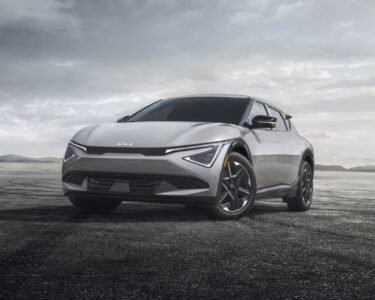
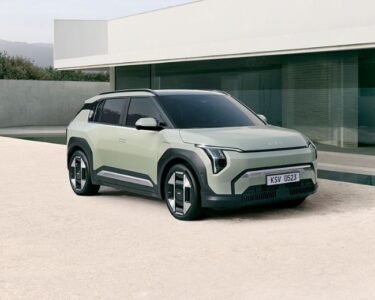
Kia has confirmed development of an EREV system based on a 2.5-liter gasoline engine. The company has not named a specific model, but reports suggest the next-generation Telluride SUV is the most likely candidate.
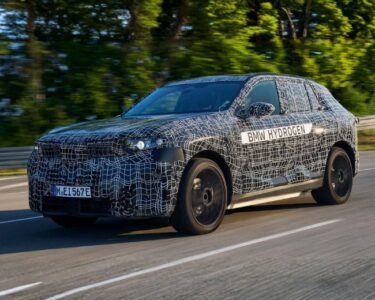
Other automakers are taking similar steps. Nissan’s upcoming Rogue e-Power uses a gasoline engine to generate electricity, though it does not support plug-in charging. Volvo is preparing new plug-in hybrids with longer electric range, while BMW, Audi, and Lotus are exploring extended-range or hybrid systems for larger vehicles.
Extended-range EVs are no longer a niche idea. They offer electric driving without forcing buyers to depend entirely on charging networks. For many U.S. buyers, especially truck and SUV owners, EREVs may become the most practical path toward electrification.