


 By
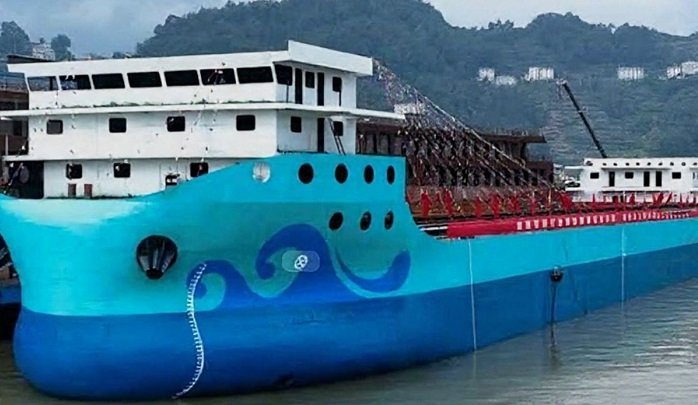
By China has taken a significant step toward sustainable shipping with the launch of the Gezoba, the world’s largest fully electric river cargo ship. Measuring 130 meters in length and capable of carrying 13,000 tons of cargo, the Gezoba symbolizes a new era of clean, intelligent maritime transport.
Revolutionary All-Electric Power System
Unlike conventional fuel-powered ships, the Gezoba runs entirely on lithium batteries. It is equipped with 12 high-capacity battery units that deliver a combined output of 24,000 kilowatt-hours, enabling the vessel to travel up to 500 kilometers on a single charge. Engineers have designed the battery system for rapid swapping, allowing for minimal downtime during operations — a crucial feature for large-scale commercial shipping.
Smart Navigation and Automation Technology
The Gezoba integrates advanced smart control systems, including remote navigation and automatic berthing capabilities. According to Yin Xinping of the Chinese Academy of Engineering, the vessel represents a “comprehensive technological advancement” in the maritime sector.
The ship’s development involved the successful integration of large-scale batteries, direct current power systems, multi-network connectivity, and ship-to-shore communications, all within a single operating platform.
Environmental and Economic Benefits
Chinese media report that the electric cargo ship will save 617 tons of fuel annually and reduce carbon emissions by 2,000 tons each year. This significant reduction supports China’s carbon neutrality goals and highlights the growing potential of green shipping technologies to reshape global trade.
The Gezoba’s zero-emission design aligns with global efforts to decarbonize maritime transport, one of the world’s most carbon-intensive industries. With its combination of efficiency, sustainability, and innovation, the Gezoba sets a powerful example for future eco-friendly cargo vessels worldwide.
A New Era for Clean Maritime Logistics
The launch of the Gezoba underscores China’s leadership in sustainable maritime engineering. By blending advanced automation with renewable energy solutions, the vessel is expected to revolutionize river and inland waterway shipping, paving the way for a smarter, greener, and more efficient future for global logistics.