


 By
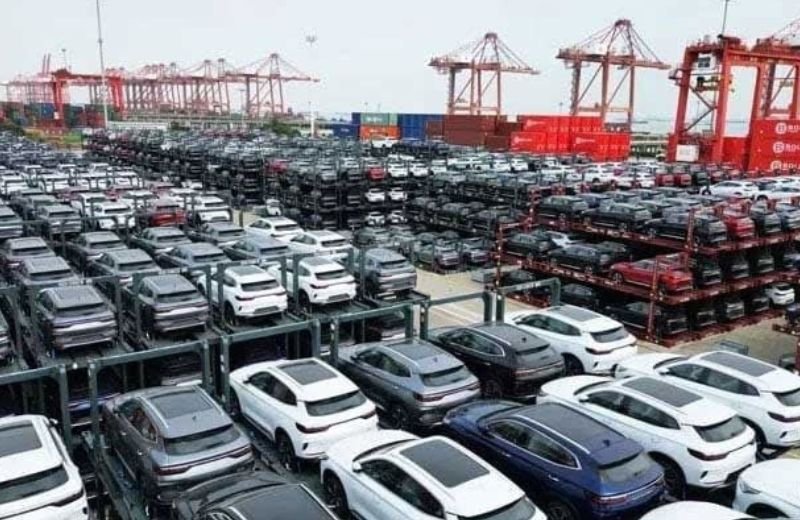
By Pakistan’s automobile import spending reached $175.6 million in January 2026, reflecting renewed activity in the country’s automotive sector despite ongoing economic pressures. The latest figures released by the State Bank of Pakistan (SBP) show strong annual growth compared with last year, although imports declined compared to the previous month.
The import bill includes fully imported vehicles, components used for local vehicle assembly, and aftermarket spare parts.
On a yearly basis, the import value increased by 23.49 percent compared with January 2025, signaling recovery after a period marked by strict import controls and reduced consumer demand.
However, month-on-month data shows a 16.02 percent decline from December 2025, indicating a short-term slowdown following higher year-end activity.
Imported Cars Register Major Annual Increase
Spending on fully built passenger vehicles remained relatively small in volume but showed the fastest growth rate.
Pakistan imported $8.2 million worth of completely built units (CBUs) in January 2026. This represents a noticeable rise from $6.3 million in December 2025 and a dramatic jump from just $1.1 million recorded in January 2025.
The sharp annual increase suggests improving availability of imported vehicles and easing market restrictions compared with early last year, when imports were significantly constrained.
CBUs refer to vehicles shipped in finished condition and ready for immediate sale and use.
CKD Imports Continue to Lead the Market
The largest share of the import bill was allocated to completely knocked down (CKD) kits, which are imported components used by local manufacturers to assemble vehicles domestically.
In January 2026, CKD imports totaled $147.4 million, making them the dominant contributor to automotive imports.
Although this figure declined from $180.3 million in December, it remained substantially higher than the $82.0 million recorded a year earlier, reflecting continued expansion in local assembly operations.
The data highlights Pakistan’s ongoing dependence on imported parts to sustain domestic vehicle production.
Spare Parts Imports Reflect Growing Vehicle Usage
Imports of general automotive spare parts reached $20.0 million during the month.
While slightly lower than December’s $22.5 million, the figure more than doubled compared with January 2025, when spare parts imports stood at $8.9 million.
The increase points toward a larger number of vehicles on the road and rising maintenance demand across the country.
Import Breakdown at a Glance
- Fully Built Cars (CBU): $8.2 million
- Local Assembly Parts (CKD): $147.4 million
- Auto Spare Parts: $20.0 million
- Total Imports: $175.6 million
CKD kits alone accounted for the majority of automotive import spending, underscoring the central role of local assembly plants in Pakistan’s auto industry.
Seven-Month Data Shows Strong Recovery
A broader view of the fiscal year reveals significant growth momentum.
Between July 2025 and January 2026, total vehicle-related imports climbed to $1.7 billion, compared with $875.1 million during the same period a year earlier.
Key changes include:
- CBU imports surged more than fourfold
- CKD imports increased sharply as production resumed
- Spare parts imports nearly doubled
The overall import value expanded by more than 100 percent year-on-year during this seven-month period.
The latest numbers indicate gradual normalization within the automotive sector after a challenging period marked by currency pressures and import restrictions.
Higher CKD volumes suggest improving production activity among local assemblers, while rising spare parts imports reflect growing vehicle utilization. Increased CBU imports also point to recovering consumer demand in the premium segment.
Also read Top Latest Small Electric Cars Worth Watching in 2026
Despite these positive signals, the sector remains heavily reliant on imported components, which continues to place pressure on foreign exchange reserves. Long-term stability will likely depend on increased localization, stable currency conditions, and consistent industrial policy.